What Does A Roof Restoration Include?
If you're considering restoring your roof, you've probably come across the term "roof restoration" dozens of times. But what does it actually include?
Many homeowners assume it's simply a matter of pressure cleaning the roof and applying a fresh coat of paint. While painting is certainly one part of the process, it's actually one of the final stages. A professional roof restoration is a comprehensive service that focuses on improving both the appearance and the condition of your roof.
At Skibo Southwest Roofing, every restoration starts with understanding the roof itself. No two roofs are exactly the same, and neither are the repairs they require. We've restored roofs throughout Campbelltown, Camden, Liverpool, Penrith and surrounding Southwest Sydney suburbs, and one thing we've learnt is that the biggest problems are often the ones you can't see from the ground.
A roof that looks like it simply needs a new coat of paint may actually have cracked ridge capping, broken tiles hidden beneath moss, deteriorated pointing or minor leaks that need attention before any coatings are applied.
In this guide, we'll walk you through what a professional roof restoration typically includes, why each stage is important and what you should expect if you're thinking about restoring your own roof.
Every Roof Restoration Starts with an Inspection
Before any work begins, the roof needs to be thoroughly assessed.
This is one of the most important stages of the entire restoration because it determines exactly what work is required.
From the ground, many roofs appear to be in reasonable condition. However, once we're on the roof, it's common to discover issues that simply aren't visible from below.
During a professional inspection we check for:
- Broken or cracked roof tiles
- Loose ridge capping
- Worn or cracked pointing
- Rust on metal roofing
- Damaged flashing
- Blocked valleys
- Evidence of previous repairs
- Signs of water entry
- General wear caused by age and weather
This inspection allows us to develop a restoration plan that's based on the actual condition of the roof—not assumptions.
Roof Cleaning Is More Important Than Most People Realise
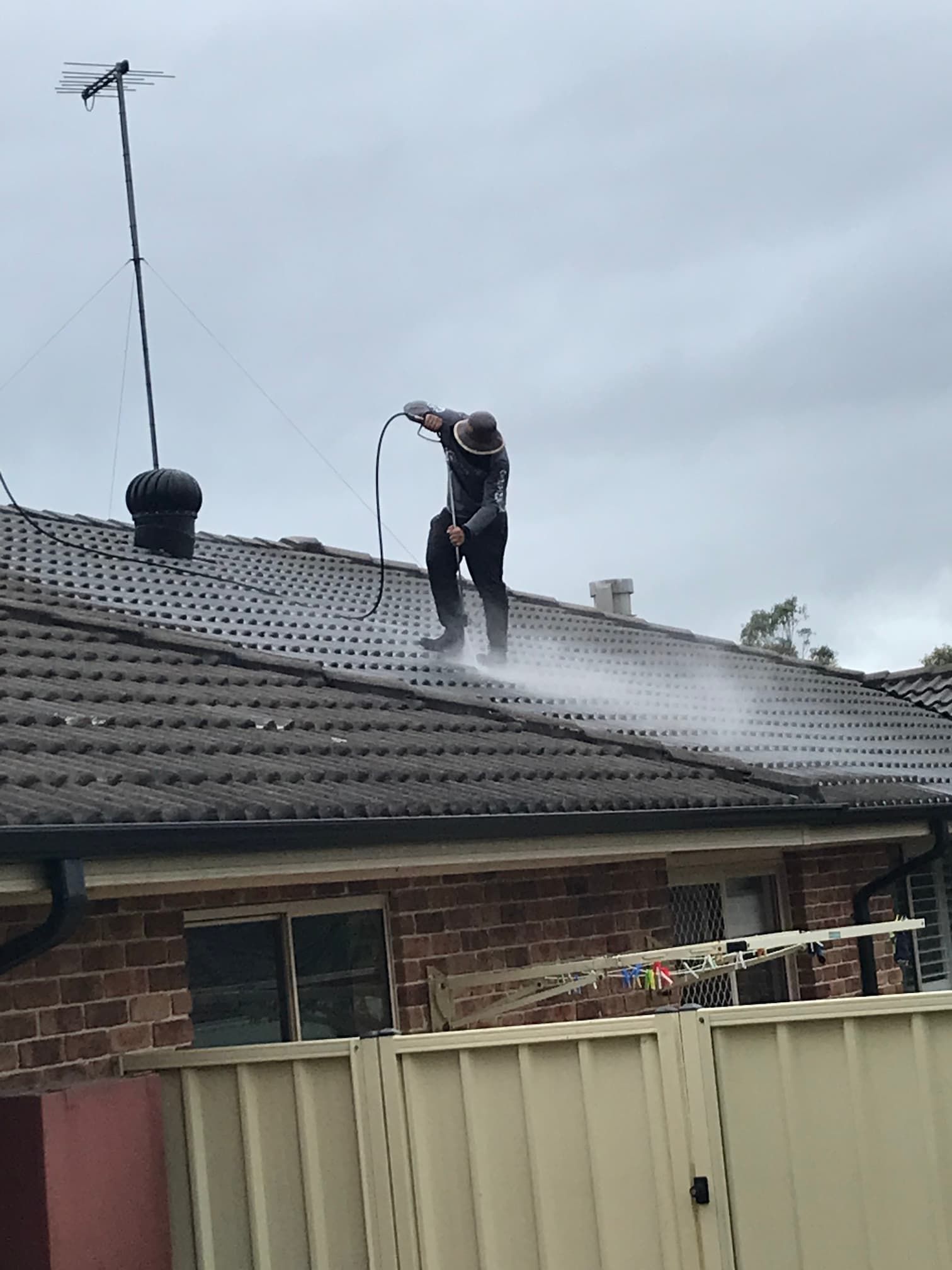
Once the inspection is complete, the next step is giving the roof a thorough clean.
Many homeowners think this stage is purely cosmetic, but it's actually one of the most important parts of the restoration.
Over time, roofs collect a surprising amount of:
- Dirt
- Moss
- Lichen
- Mould
- Algae
- Leaf litter
- Bird droppings
- Airborne pollution
All of this needs to be removed before repairs or coatings can begin.
Cleaning also reveals the true condition of the roof.
One thing we've noticed after restoring hundreds of roofs is that pressure cleaning often uncovers problems homeowners never knew existed. Moss can hide cracked tiles, deteriorated mortar and previous repair work that's beginning to fail.
Finding these issues before the roof is painted allows them to be repaired properly rather than simply being covered up.
Depending on the roofing material, cleaning may involve commercial pressure cleaning, soft washing or manual removal of stubborn debris.
Roof Repairs Come Before Appearance
One of the biggest misconceptions about roof restoration is that it's mainly about making the roof look better.
In reality, the appearance comes after the repairs.
There's little point applying premium roof coatings if the roof itself still has damaged components.
Depending on the roof's condition, repairs may include:
- Replacing cracked or broken roof tiles
- Repairing minor leaks
- Replacing damaged flashing
- Tightening or replacing screws on metal roofs
- Repairing small sections of corrosion
- Fixing damaged valleys
- Replacing worn roof components
Every repair completed during this stage helps ensure the roof performs as well as it looks once the restoration is finished.
Rebedding and Repointing – Do All Roofs Need It?
This is one of the questions we're asked most often.
The answer is not always.
Rebedding and repointing are only required when the condition of the ridge capping makes it necessary.
Older tiled roofs commonly develop movement over time.
The mortar beneath the ridge caps can crack, loosen or begin breaking away after years of exposure to changing weather conditions.
If the bedding has deteriorated, rebedding involves removing the old mortar and installing new bedding so the ridge caps are securely positioned once again.
After that, flexible pointing is applied over the bedding.
Modern flexible pointing is designed to move slightly with the roof as temperatures change, reducing the likelihood of cracking compared with older mortar-only systems.
If the existing bedding remains solid, a roof may only require repointing rather than complete rebedding.
This is exactly why an inspection is so important—every roof is different.
Not Every Roof Restoration Includes the Same Work
One thing we always explain to homeowners is that there isn't a standard "one-size-fits-all" roof restoration package.
Every roof has its own challenges.
For example, an older concrete tiled roof in Campbelltown that's been covered by gum trees for years will often require much more cleaning and tile replacement than a newer roof in a recently developed estate.
Likewise, a Colorbond roof may not require rebedding or repointing at all, but it could need rust treatment, screw replacement and specialised primers before recoating.
The restoration should always be tailored to what your roof actually needs—not simply follow the same checklist every time.
Preparing the Roof for Its New Protective Coating
Once repairs have been completed, the roof is prepared for its new protective coating system.
Preparation is often overlooked by homeowners because it isn't particularly visible, but it's one of the biggest factors affecting how long the restoration will last.
For tiled roofs, this usually involves applying a suitable primer or sealer.
Concrete roof tiles naturally become porous as they age.
Without sealing the surface properly, roof coatings may not bond as effectively, reducing their lifespan.
For metal roofs, preparation may include rust-inhibiting primers or specialised metal preparation products designed to improve adhesion and long-term durability.
Although this stage doesn't dramatically change the appearance of the roof, it creates the foundation for a restoration that continues performing well for years after it's completed.
Roof Painting Is the Final Stage—Not the First
When people picture a roof restoration, they usually imagine someone spraying a fresh coat of paint across the roof.
While this is certainly one of the most satisfying parts of the process, it's actually one of the last things we do.
By this point, the roof has already been:
- Inspected
- Cleaned
- Repaired
- Prepared
- Primed where required
Only then do we begin applying premium roof coatings.
Rather than simply improving appearance, modern roof coatings are designed to help protect the roofing material from Australia's harsh climate while giving the roof a clean, consistent finish.
Depending on the roof and coating system being used, multiple coats are typically applied to achieve even coverage and long-lasting protection.
A professionally restored roof shouldn't just look impressive on the day the work is finished—it should continue looking great for many years afterwards.
Are Gutters and Valleys Included in a Roof Restoration?
In many cases, yes.
Although homeowners often focus on the roof itself, gutters and valleys play an important role in protecting your home from water damage. If they're blocked with leaves, dirt or debris, rainwater can't drain properly, increasing the risk of overflowing gutters and water backing up beneath the roofing materials.
As part of many roof restorations, we clear:
- Leaves and twigs
- Built-up dirt and sludge
- Moss washed down from the roof
- Debris blocking roof valleys
- Material preventing proper water flow
Keeping these areas clear helps the roof perform as it should, particularly during heavy rainfall.
It's always worth asking your roofing contractor exactly what's included in their restoration package, as services can vary between companies.
What Happens If More Damage Is Found?
This is something many homeowners don't think about before work begins.
Once the roof has been pressure cleaned, it's not unusual to discover additional problems that weren't visible beforehand.
We've restored roofs where homeowners thought they only had a handful of cracked tiles, only to uncover dozens once years of moss and dirt had been removed. In other cases, cleaning has revealed deteriorated flashing, worn valley irons or ridge capping that wasn't as secure as it first appeared.
Finding these issues isn't a bad thing—it gives us the opportunity to repair them before they turn into more serious and expensive problems.
If additional work is required beyond the original scope, we explain exactly what we've found and discuss the available options before proceeding.
Does Every Roof Restoration Include Roof Painting?
Not necessarily.
While painting or applying protective roof coatings is one of the most common parts of a roof restoration, the exact process depends on the roofing material and the condition of the roof.
For example:
- Concrete tiled roofs are commonly cleaned, repaired, sealed and coated.
- Metal roofs may require rust treatment, specialised primers and protective metal coatings.
- Some roofs may only require repairs and cleaning if the existing coating is still performing well.
Rather than applying the same process to every roof, we tailor each restoration to suit the materials and condition of the roof we're working on.
What Isn't Usually Included in a Roof Restoration?
A quality roof restoration can solve many roofing issues, but it's important to understand its limits.
A standard restoration doesn't usually include:
- Replacing the roof frame or structural timbers
- Installing a completely new roof
- Major structural repairs
- Extensive asbestos roof replacement
- Replacing insulation inside the roof space
- Large-scale storm damage repairs that require reconstruction
If a roof has widespread structural deterioration or has reached the end of its service life, a replacement may be a more suitable option than restoration.
This is why the initial inspection is so important—it helps determine whether restoration is the right investment before any work begins.
Roof Restoration vs Roof Repairs
People often ask whether they need roof repairs or a complete roof restoration.
The answer depends on the overall condition of the roof.
Roof repairs focus on fixing specific problems such as:
- A leaking roof
- Broken roof tiles
- Damaged flashing
- Loose ridge caps
- Localised storm damage
A roof restoration is more comprehensive.
It addresses the roof as a whole by combining repairs with cleaning, preparation and protective coatings to improve both appearance and long-term performance.
If the roof has multiple signs of ageing rather than one isolated issue, restoration is often the more cost-effective long-term solution.
Can You Stay Home During a Roof Restoration?
In most cases, yes.
Because almost all of the work takes place outside, homeowners can usually continue living in their home while the restoration is being completed.
You'll hear pressure cleaning equipment and tradespeople working on the roof during the day, but there's generally very little disruption inside the house.
If access is required around the property, we'll let you know beforehand so vehicles, outdoor furniture or other items can be moved if necessary.
Our goal is always to complete the project efficiently while causing as little inconvenience as possible.
How Do You Know If Your Roof Needs Restoring?
One of the biggest advantages of restoring a roof is addressing problems before they become major repairs.
Some common signs that your roof may benefit from restoration include:
- Faded or patchy roof colour
- Moss, lichen or algae growth
- Cracked or broken roof tiles
- Deteriorating ridge capping
- Peeling or worn roof coatings
- Minor roof leaks
- Surface rust on metal roofing
- A roof that simply looks tired compared to neighbouring homes
If you're unsure, a professional inspection is the easiest way to determine whether restoration is appropriate or if another solution would be better.
Why Choosing the Right Roofing Company Matters
Not all roof restorations are completed to the same standard.
One thing we've learnt over the years is that the preparation work is what determines how long a restoration lasts.
Anyone can apply roof paint, but lasting results come from identifying underlying issues, carrying out quality repairs and using products that are suited to the roof itself.
A professional roof restoration should never be rushed or treated as simply a cosmetic upgrade. When completed properly, it protects one of the most important parts of your home and can significantly extend the life of your existing roof.
Conclusion
So, what does a roof restoration include?
It's far more than simply washing the roof and applying a fresh coat of paint. A professional roof restoration is a carefully planned process that typically includes a detailed inspection, thorough cleaning, repairs, rebedding and repointing where required, preparation, protective coatings and a final quality check to ensure everything has been completed to a high standard.
At Skibo Southwest Roofing, every restoration is tailored to the condition of the individual roof. We've worked on homes throughout Campbelltown, Camden, Liverpool, Penrith, Narellan, Oran Park and the wider Southwest Sydney region, and we know that no two roofs are exactly alike. Some require only minor repairs and a fresh protective coating, while others need more extensive restoration work before they're ready for the final finish.
If your roof is beginning to show signs of age, don't wait until small issues become expensive repairs. A professional roof inspection can identify what's needed and help you determine whether a roof restoration is the right solution.
With the right preparation, quality workmanship and premium materials, a roof restoration can protect your home, improve its appearance and extend the life of your roof for many years to come.
Written by Nick from Skibo Southwest Roofing
Nick's been in the roofing game for more than 15 years and has extensive experience in everything from new roofs to reroofing, roof restorations, roof painting, roof repairs and much more.